Reinventing messaging to build real community connections
An emotionally safe, behaviour-driven chat experience for a community-first dating app in India.
Context
Why Reimagine Chat, Not Just Matching?
Quail is a community-driven dating app built for people who want more than endless swipes. It’s designed for genuine relationships romantic and platonic within their local community.
Most dating products obsess over the match. But when you zoom in on the real journey, matches are just the start. The actual relationship lives or dies inside the chat.
I set out to redesign Quail’s messaging experience with one belief:
If we design for emotional safety, clarity, and effort on both sides, we can turn fragile chats into real connections.
This case study focuses on how behavioural science and psychology shaped that messaging layer.

The Modern Dating Dilemma
Emotional Slot Machine
Modern dating apps work like variable-reward systems:
Dopamine spike when you get a match or notification.
Emotional crash when conversations fizzle, stall, or turn awkward.
Repeating this cycle creates a slot-machine effect high engagement, but also high emotional fatigue.
Key problems that surfaced:
Overwhelming options → shallow swiping, low commitment.
Ghosting & anxiety → users feel disposable and undervalued.
Privacy & safety worries → especially pronounced for women.
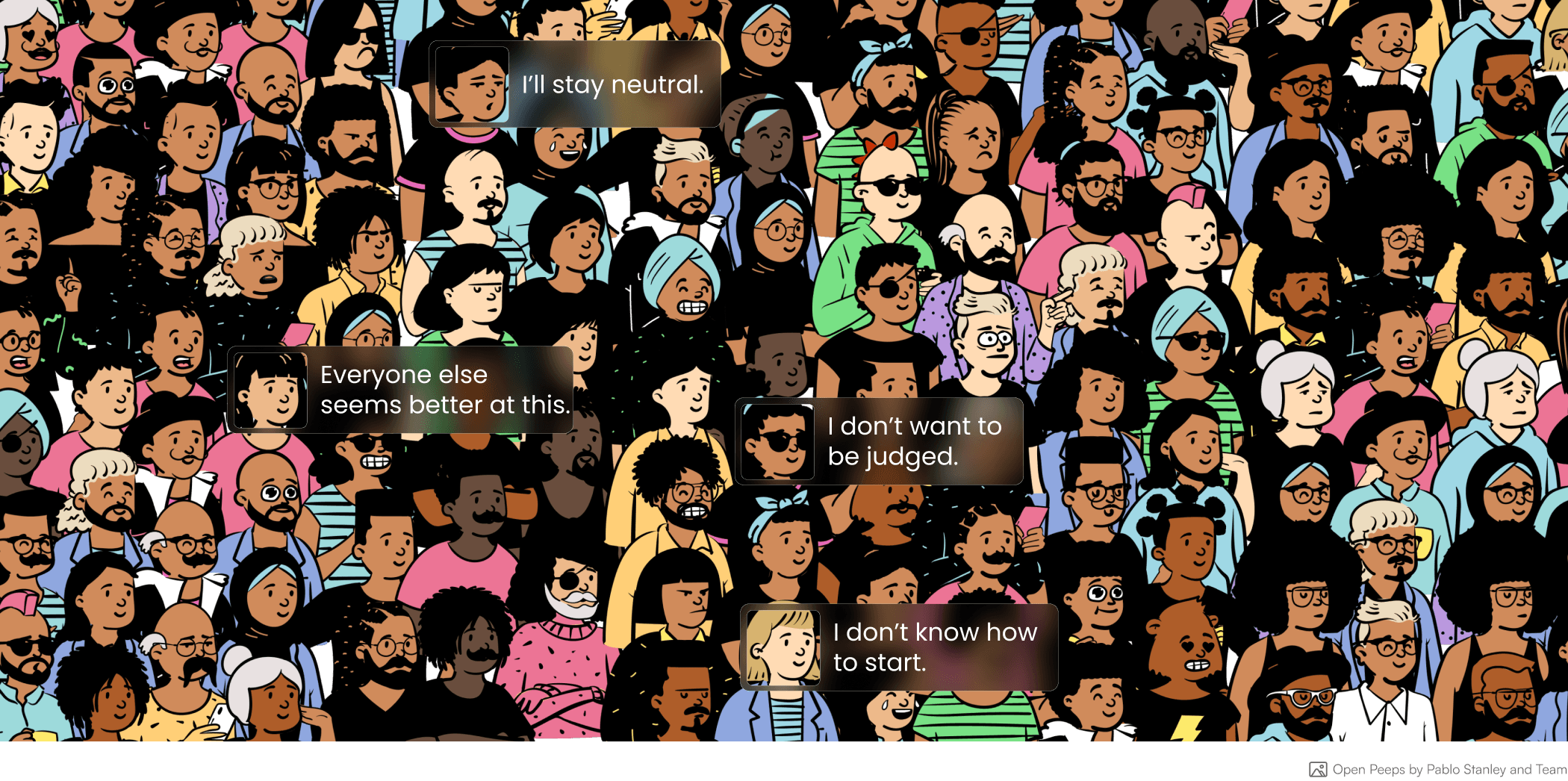
Shallow conversations → “Hey”, “Hi”, “Wyd?” that go nowhere.
Tone misunderstandings → messages read as rude, blunt, or creepy when that wasn’t the intent.
The cost isn’t just churn. It’s self-esteem, trust, and emotional safety.
Research
Listening Beyond the Swipe
I conducted conversations with 50+ people (18–60) across metros and smaller cities, from young professionals to students. I complemented qualitative interviews with survey-style questions to understand comfort levels, habits, and fears.
What People Told Us
1. The Desire for Real Connection
Most users weren’t chasing infinite matches they wanted one or a few meaningful connections. Too much choice created:
Paradox of choice → the more profiles they saw, the less satisfied they felt with any one of them.
Fear of missing out → hesitation to invest deeply in one conversation.
2. Validation vs Vulnerability
Matches and replies felt like small hits of validation.
Rejection (or silence) lit up the same emotional pain circuits as social exclusion.
Many users reduced how much they shared to protect themselves creating guarded, shallow conversations.
3. Privacy Is Non-Negotiable
Users especially women had strong concerns about harassment and misuse of personal data.
Many were reluctant to share contact numbers or social handles early in the chat.
Verified identity and control over what’s visible felt as important as “good UX”.
4. Ghosting Harms More Than It “Protects”
Ghosting was described as “confusing”, “disrespectful”, and “draining”.
People weren’t asking to be forced into replies they just wanted clarity so they could move on.
5. Tone Is the Hidden Villain
Short texts (“k”, “fine”, “sure”) often felt cold or passive-aggressive.
Some users over-compensated with emojis; others avoided them and came across as blunt.
Many wished for “a small nudge that tells me if what I’m sending sounds off”.
Behavioural Insights
From the research, several behavioural principles emerged:
Negativity Bias
People weigh negative cues more heavily than positive ones. One ambiguous message can overshadow a dozen good ones.Cognitive Load
Emotional decisions are harder when users must think too much about tone, safety, meaning, and risk while typing.Loss Aversion
People fear losing safety, privacy, or dignity more than they value new opportunities.Authority & Trust Signals
Verified profiles, clear safety badges, and visible system cues shape how seriously people take others.Feedback Loops
Gentle, timely feedback can nudge users towards more respectful, thoughtful behaviour over time.Social Reciprocity
When users feel the other person is also putting in effort (e.g., answering a shared quiz), they’re more likely to reciprocate.
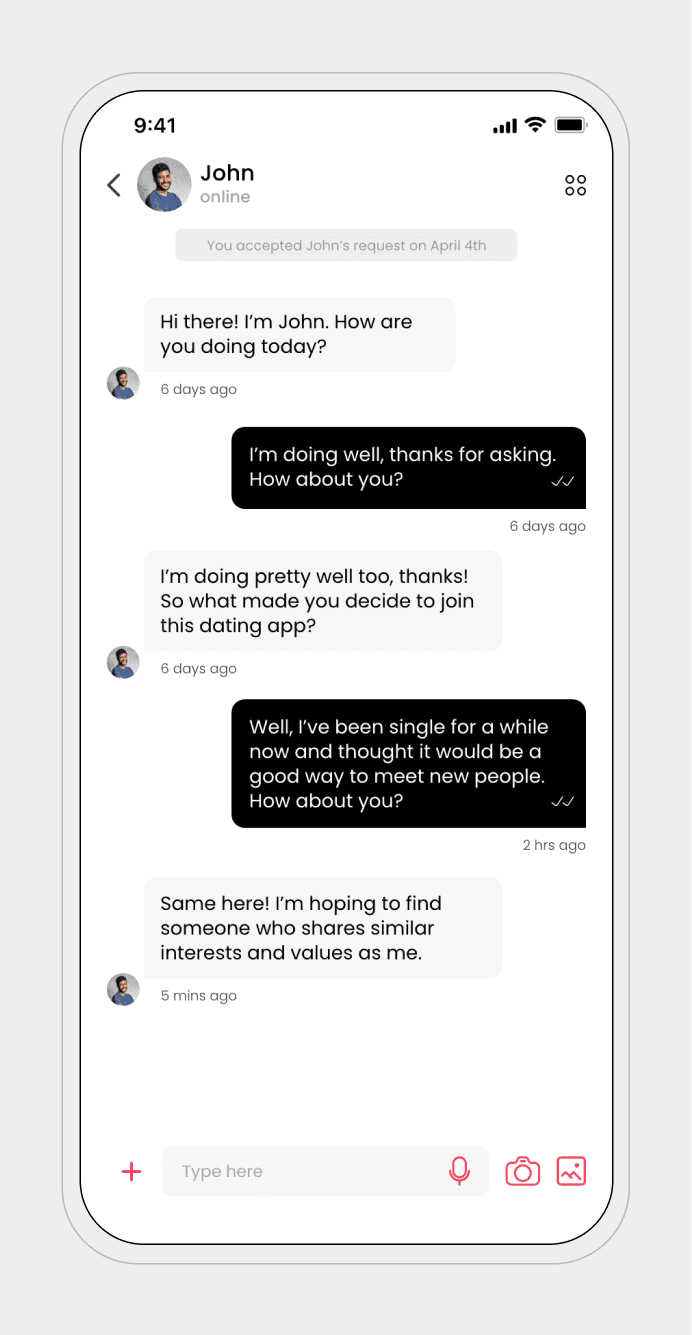
The chat redesign for Quail is essentially a behavioural system built on top of a simple messaging UI.
Final design
The app highlights the correct platform the moment a rider approaches the split. No scanning. No guesswork. Just clear direction.
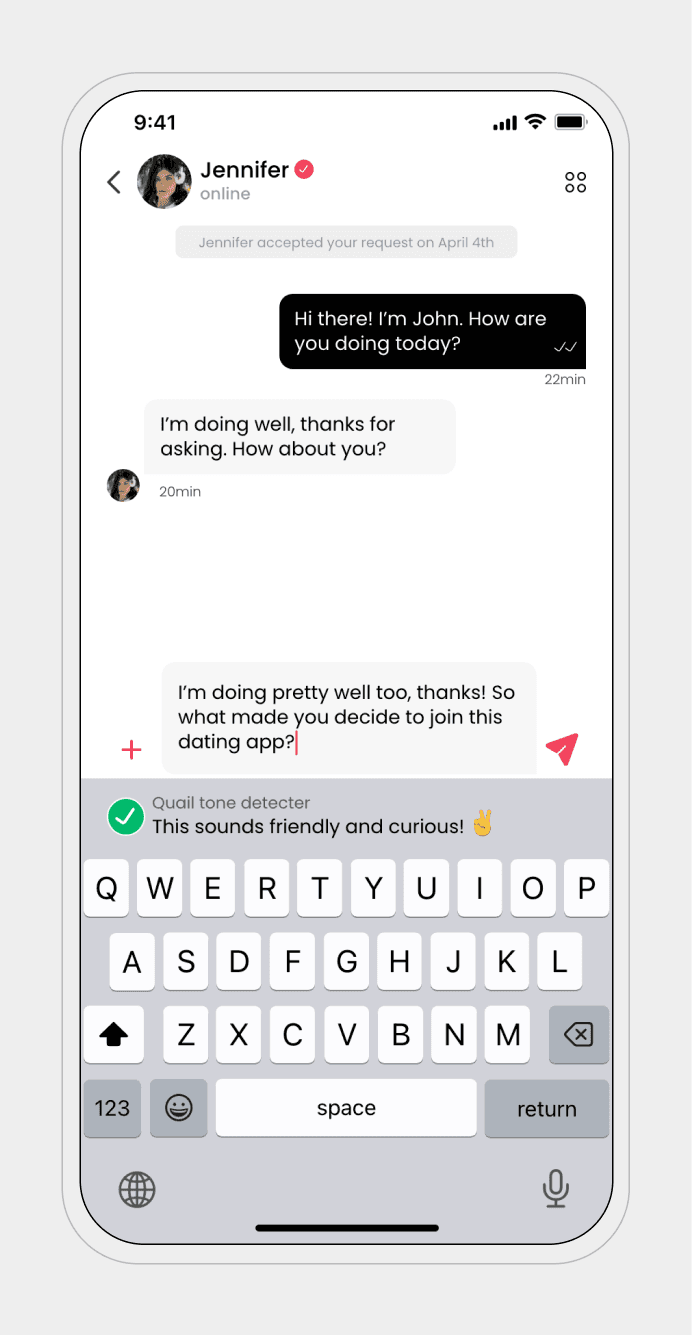
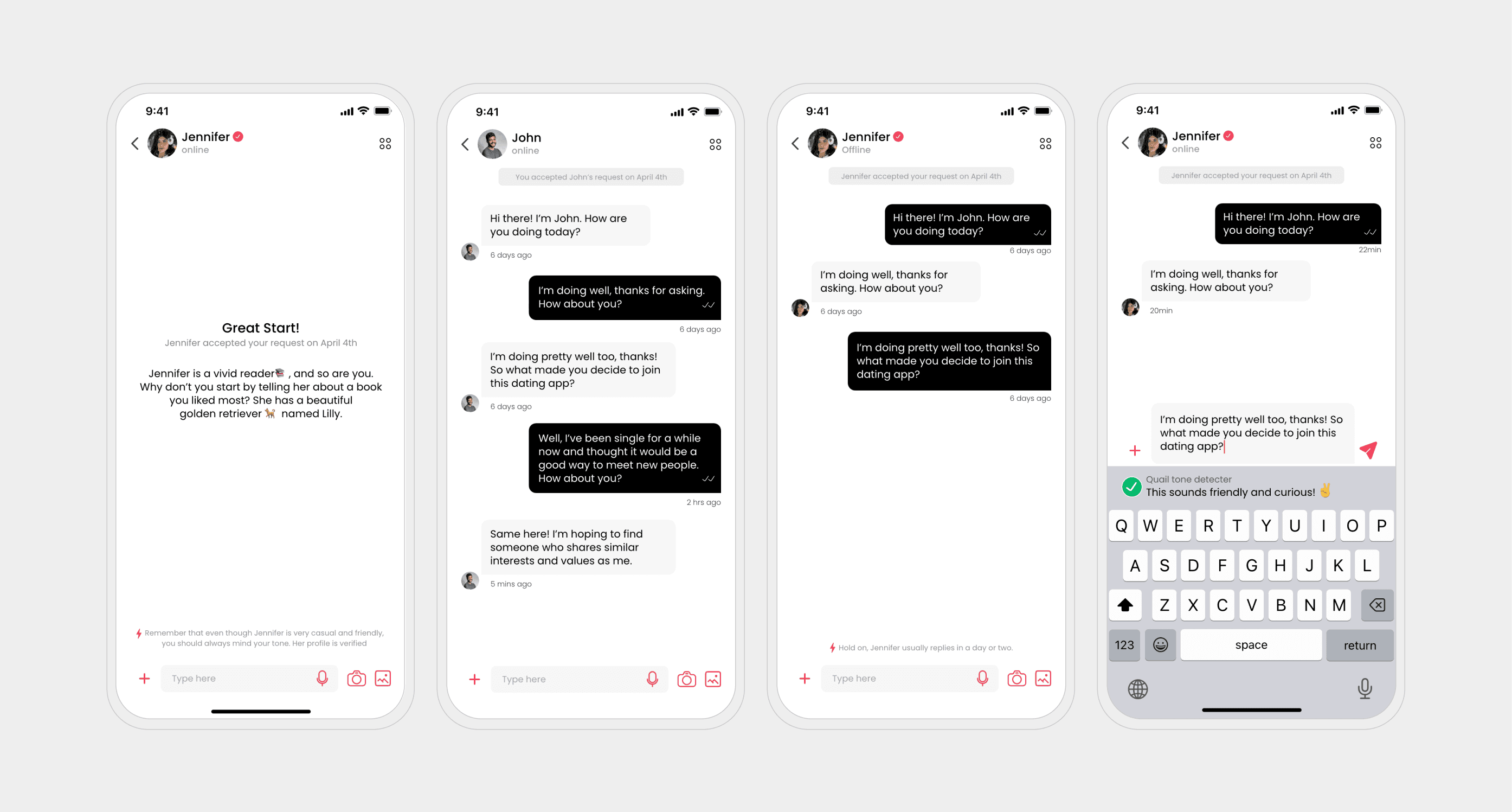
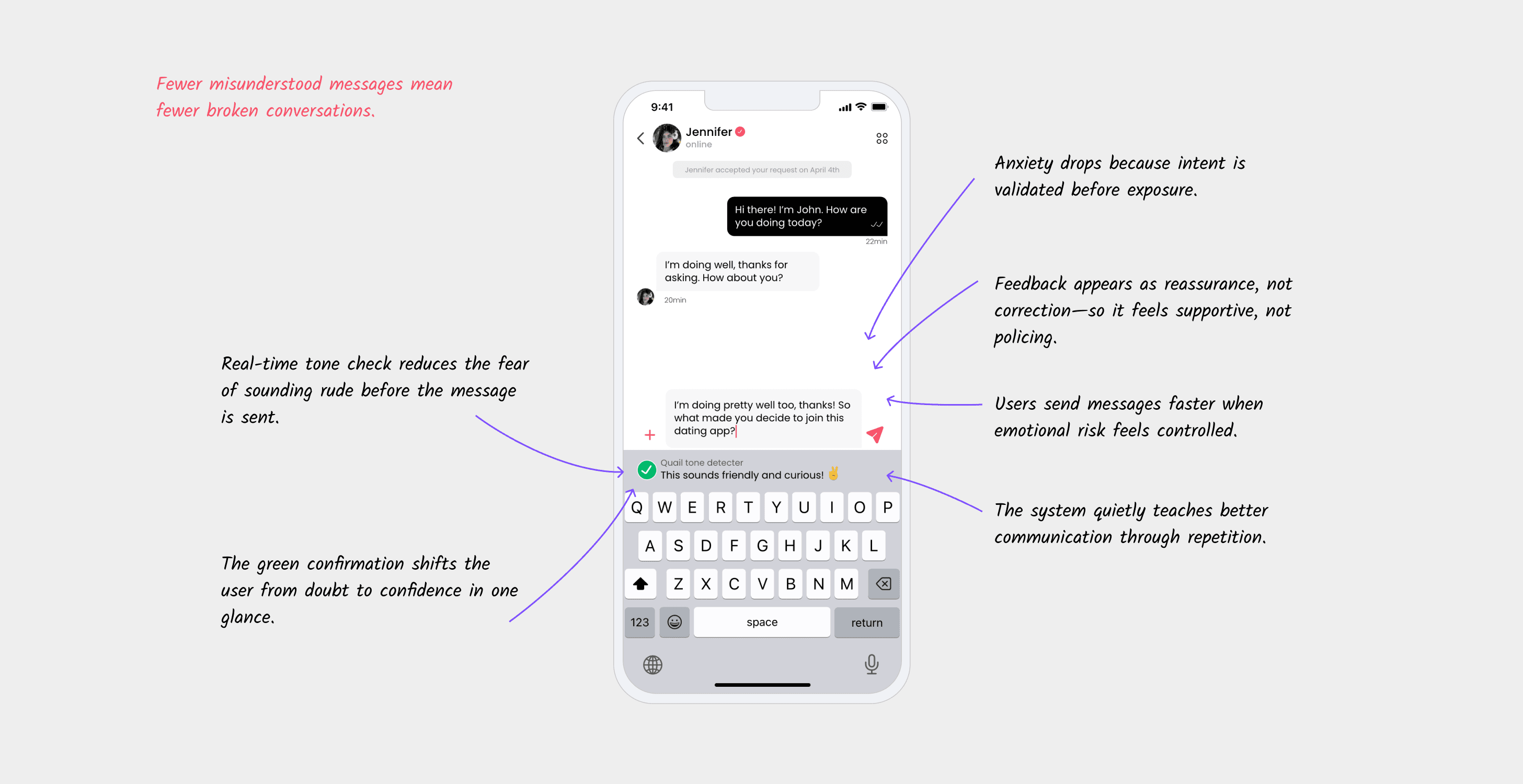
Tone Detector - Saying It Right
Problem
Text strips away tone. A neutral or rushed message can be read as dismissive, rude, or creepy especially when users are already anxious.
Design
As users type, an unobtrusive tone strip analyses the message.
It surfaces simple cues, such as:
“Feels a bit abrupt. Want to soften it?”
“This sounds playful. Great for a light opener.”
It offers one-tap rewrites or small suggestions like adding context or a question.
Feedback is framed as support, never judgment. The system is “on your side”.
Safer Starts - Building Trust Before the First Message
Problem
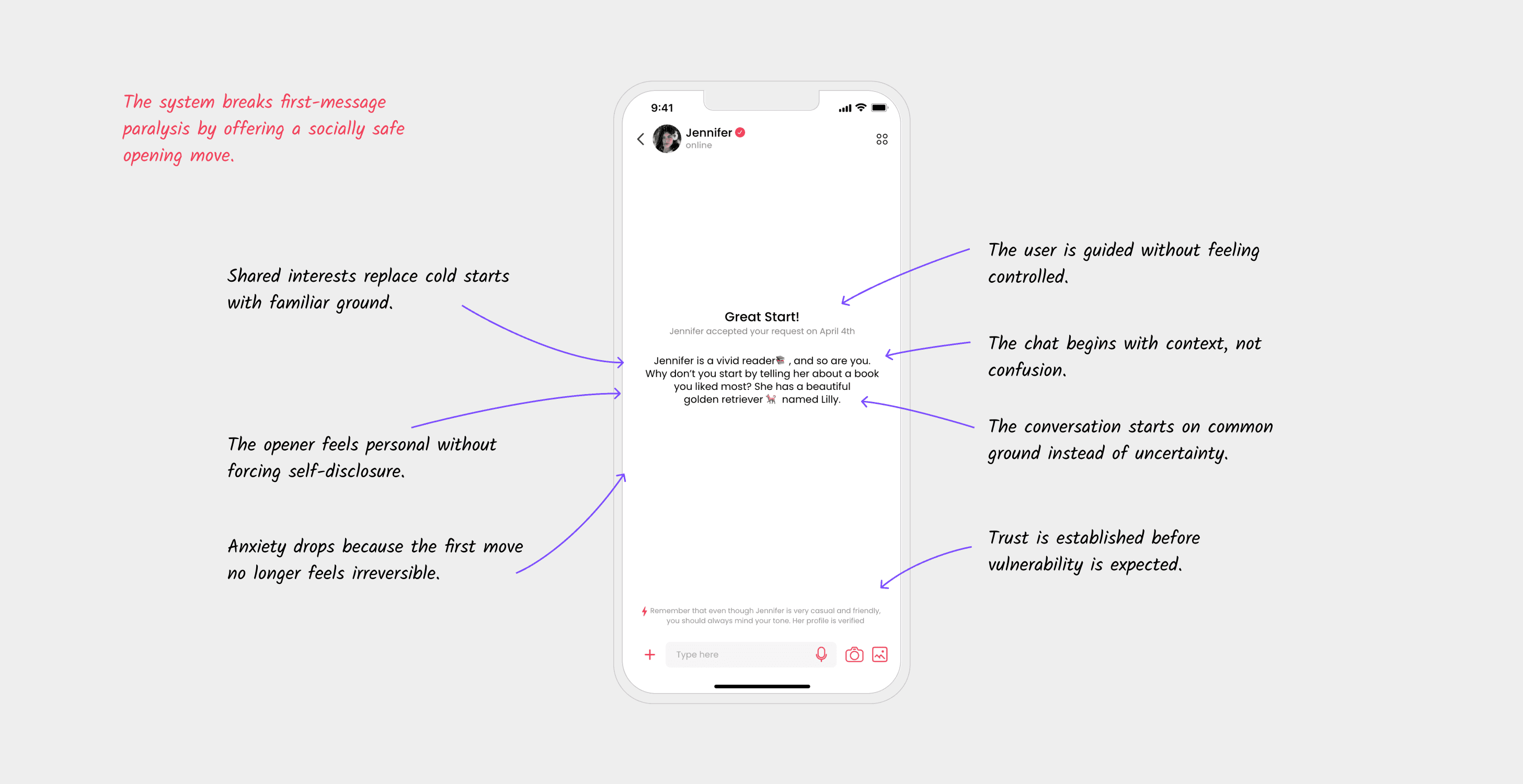
The most fragile moment in any chat is the first message. Users worry about:
Saying something awkward.
Revealing too much too soon.
Being judged or ignored.
Behavioural Principles
Loss Aversion – fear of saying the wrong thing > excitement of saying the right thing.
Authority Bias – verified and clearly framed profiles feel safer.
Self-Disclosure Theory – people open up more when they feel in control of what they share.
Design
Mutual Context Panel
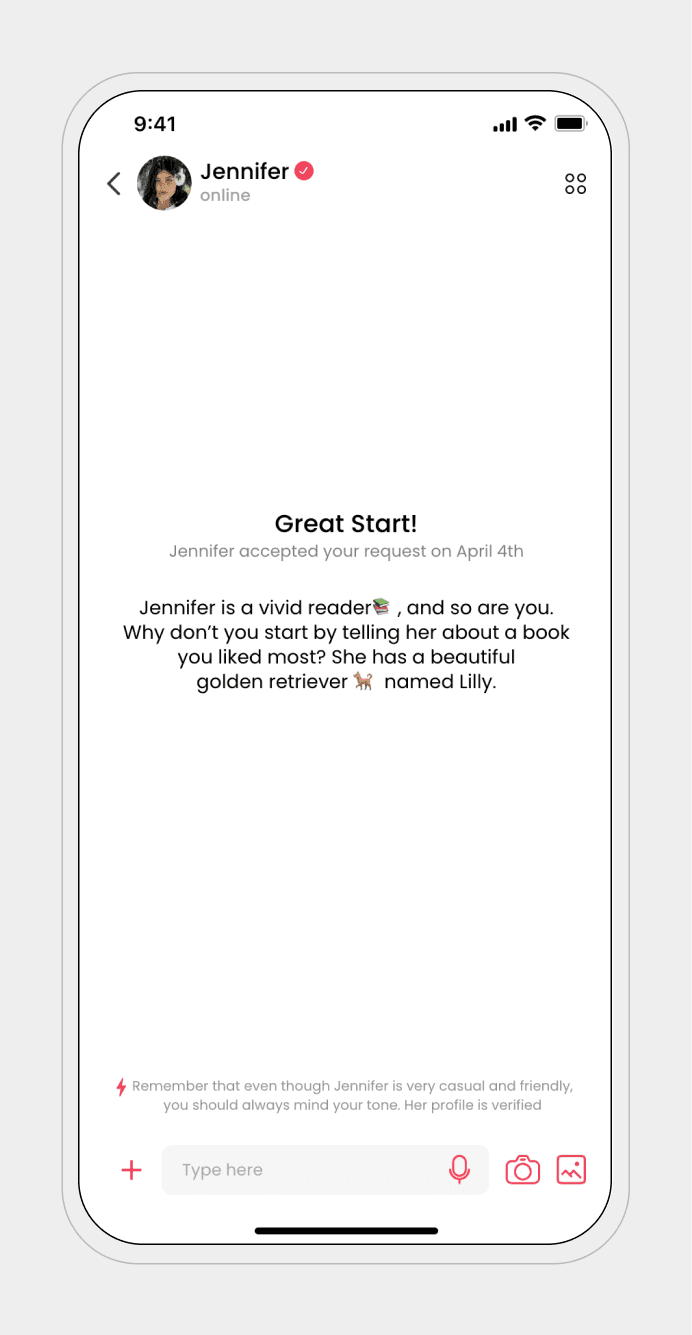
Shows shared interests, common communities, or overlapping preferences.
Offers suggested openers based on that overlap:
“You both love indie films want to ask about a recent favourite?”
Safety & Verification Layer
Verified profiles are clearly labelled, with a short explanation of what verification means.
Location and personal contact details are opt-in, with highly visible controls.
A brief “mind the conversation” reminder sets norms: be respectful, be honest, be kind.
Privacy-First Sharing
Users can choose what to reveal (e.g., neighbourhood, workplace domain, interests) to balance safety and relatability.
Anti-Ghosting Nudges - Designing Better Endings
Problem
Ghosting is emotionally costly but behaviourally easy. It avoids short-term discomfort but creates long-term mistrust.
Behavioural Principles
Present Bias – people prefer avoiding awkwardness now, even if it harms someone later.
Ambiguity Aversion – not knowing where you stand is more stressful than a clear “no”.
Gentle Commitment Devices – small reminders can push users to act more considerately.
Design
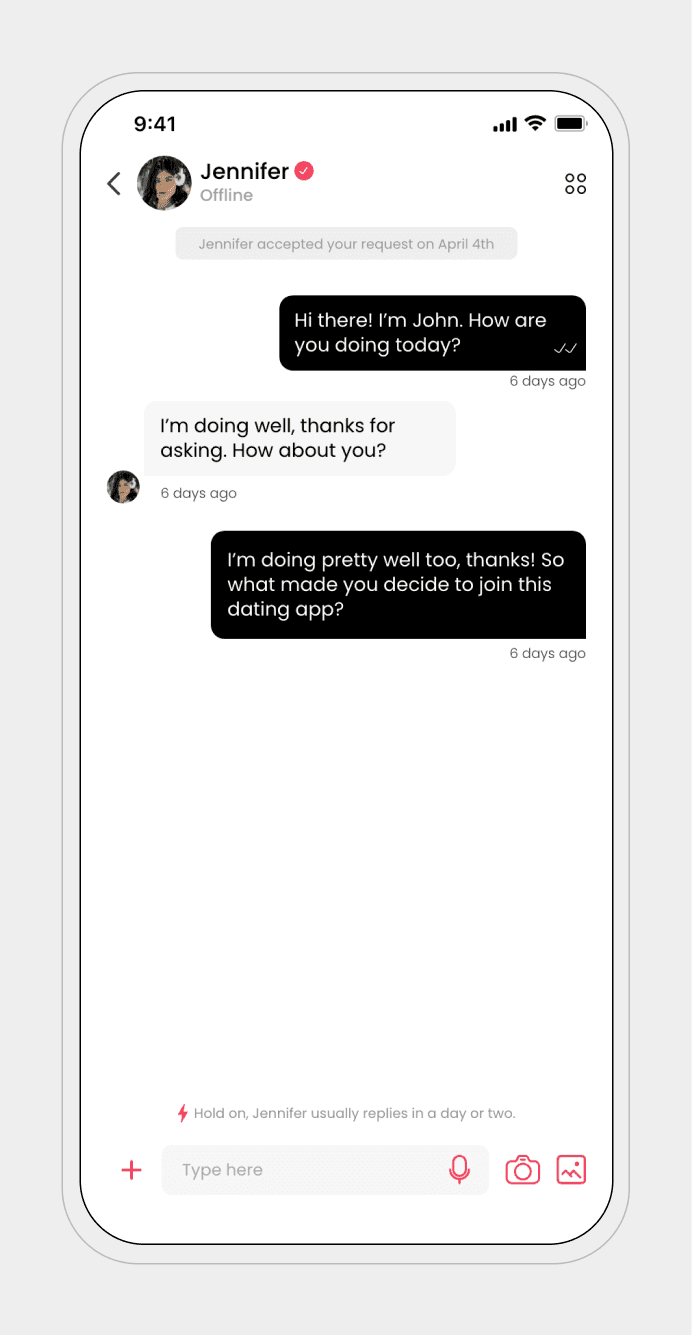
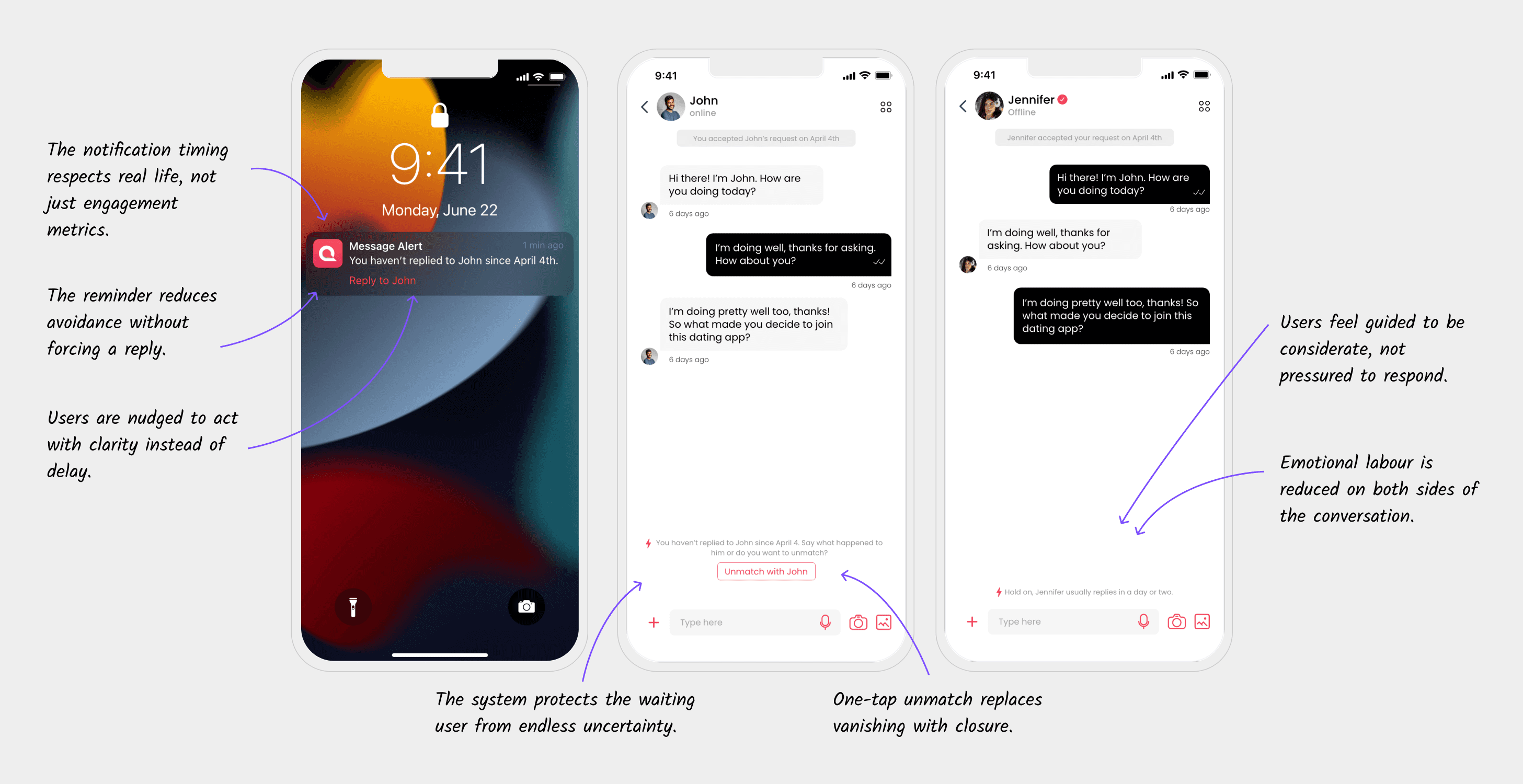
Quail doesn’t punish silence, but it reframes it:
In-Chat Reminder Badge
If a conversation is inactive beyond a context-sensitive window, the sender sees:
“No reply yet. People get busy want to send a gentle follow-up or leave it?”
The recipient may see:
“You haven’t replied in a while. Would you like to respond or end the chat kindly?”
Respectful Unmatch Flow
Instead of disappearing, users are offered one-tap options like:
“I don’t feel the connection.”
“I’m taking a break from dating.”
The other person receives a short, neutral closure message so they can move on.
Notification Hygiene
Push notifications adapt to behaviour, reducing “needy” or spammy alerts.
If a user repeatedly opens the app but ignores a specific chat, Quail avoids nagging them about it.
Chemistry in Real Time
Problem
Even with good conversation, users often wonder: “Is there actually something here, or are we forcing it?”
Behavioural Principles
Social Reciprocity – answering questions together feels more invested than passively chatting.
Playful Exploration – games lower social anxiety and invite more honest self-expression.
Shared Reality – feeling “on the same page” increases attachment.
Design
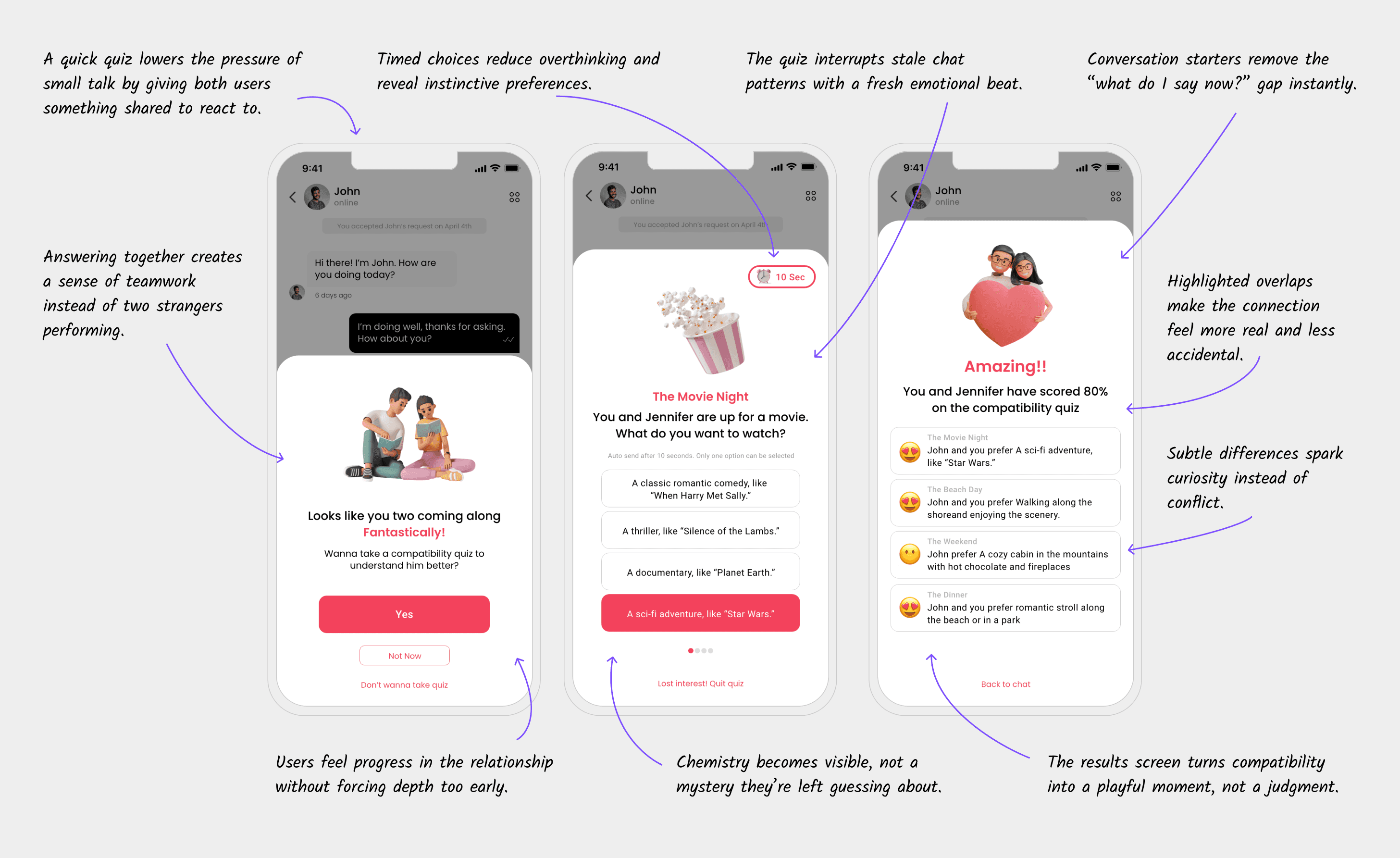
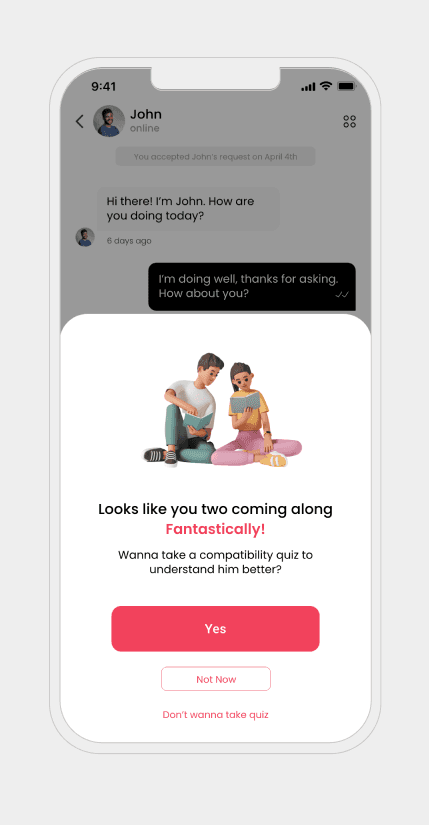
The Compatibility Quiz is embedded into the chat flow, not a separate feature:
Either user can trigger it with a simple prompt (“Take a quick compatibility check?”).
Both answer short, real-time questions simultaneously on values, habits, and preferences.
At the end, users get:
A compatibility snapshot (not a score to obsess over).
Conversation starters grounded in shared or contrasting answers:
“You both picked spontaneous weekend trips ask about their favourite one.”
“You differ on long-term planning curious why?”
Rest of the design
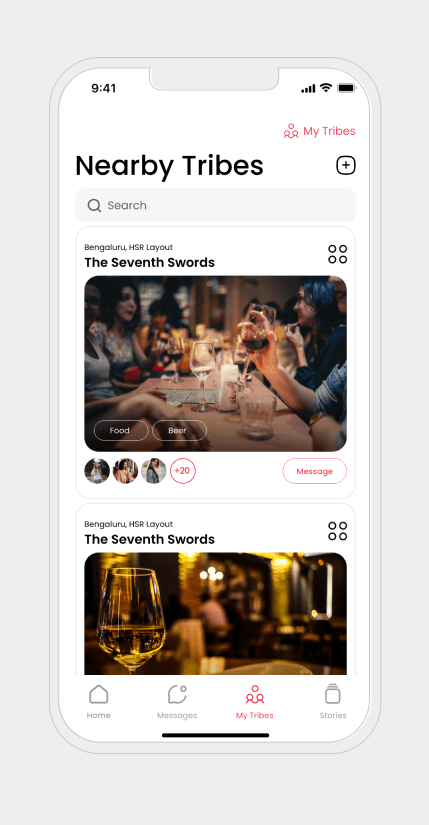
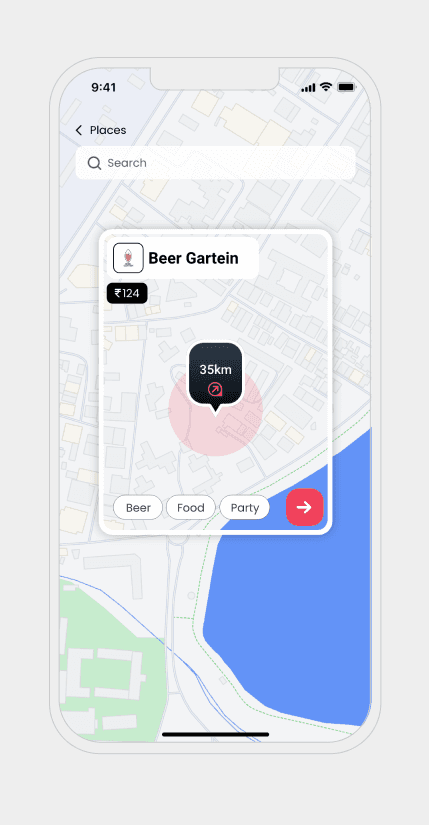
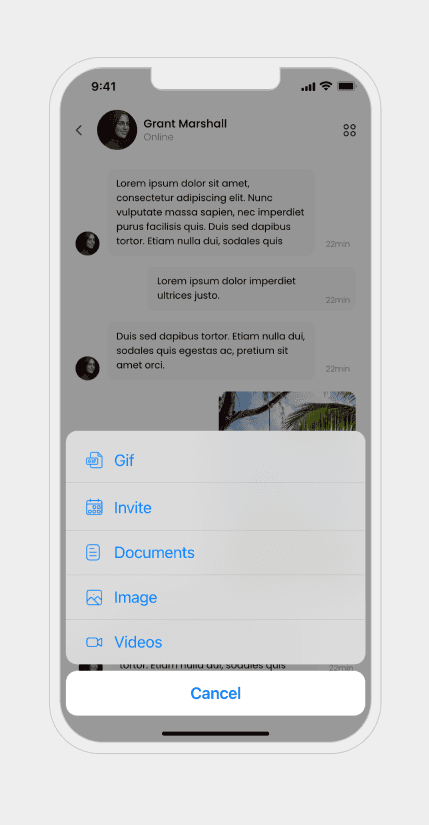
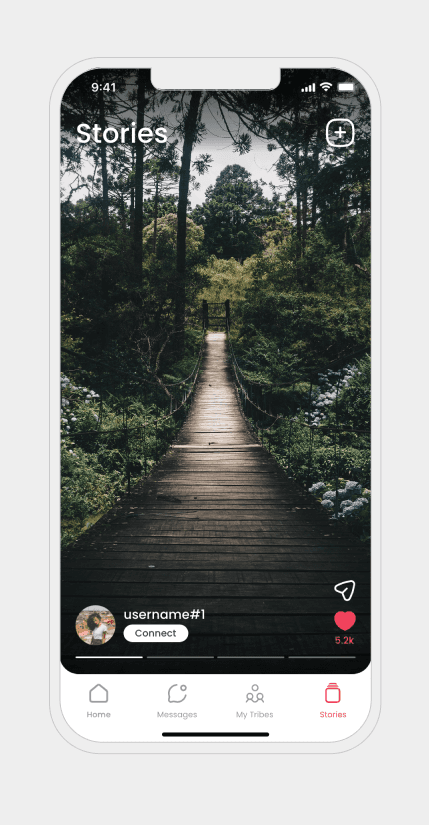
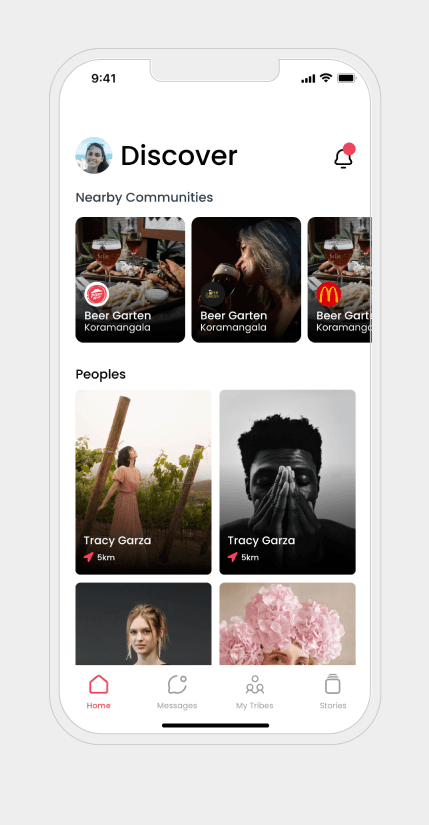
Together, these interventions turn a simple messaging UI into a behavioural system that protects emotional safety, reduces guesswork, and gives people more chances to form real, offline connections.
Reflection
Designing for modern dating is humbling.
People don’t need louder notifications or smarter matching. They need spaces that feel safe enough to be honest, and simple enough to focus on each other instead of the interface.
Three things stood out for me:
• Emotional safety is a feature, not a side effect. Tone support, privacy controls, and clear endings matter as much as UI polish.
• Small nudges change behaviour. Gentle prompts around tone, follow-ups, and closure can shift a culture of ghosting towards more considerate habits.
• Real connection lives in the in-between moments. The way an app handles silence, doubt, and vulnerability shapes how people feel about themselves not just the product.
This project deepened my understanding of behavioural design, online trust, and how quiet product decisions can meaningfully change how people show up for each other.